

Investing in a premium Roof Replacement is one of the most significant decisions you will make for your home. When you hire an elite roofing company in the Kansas City metro—from the historic estates in Leawood to the elegant residences in Fairway and Lenexa—you expect your property to look better after the crew leaves than it did before. However, the physical reality of a roof tear-off is highly destructive by nature. Removing thousands of square feet of weathered asphalt shingles, underlayment, and metal fasteners generates tons of sharp, heavy debris.
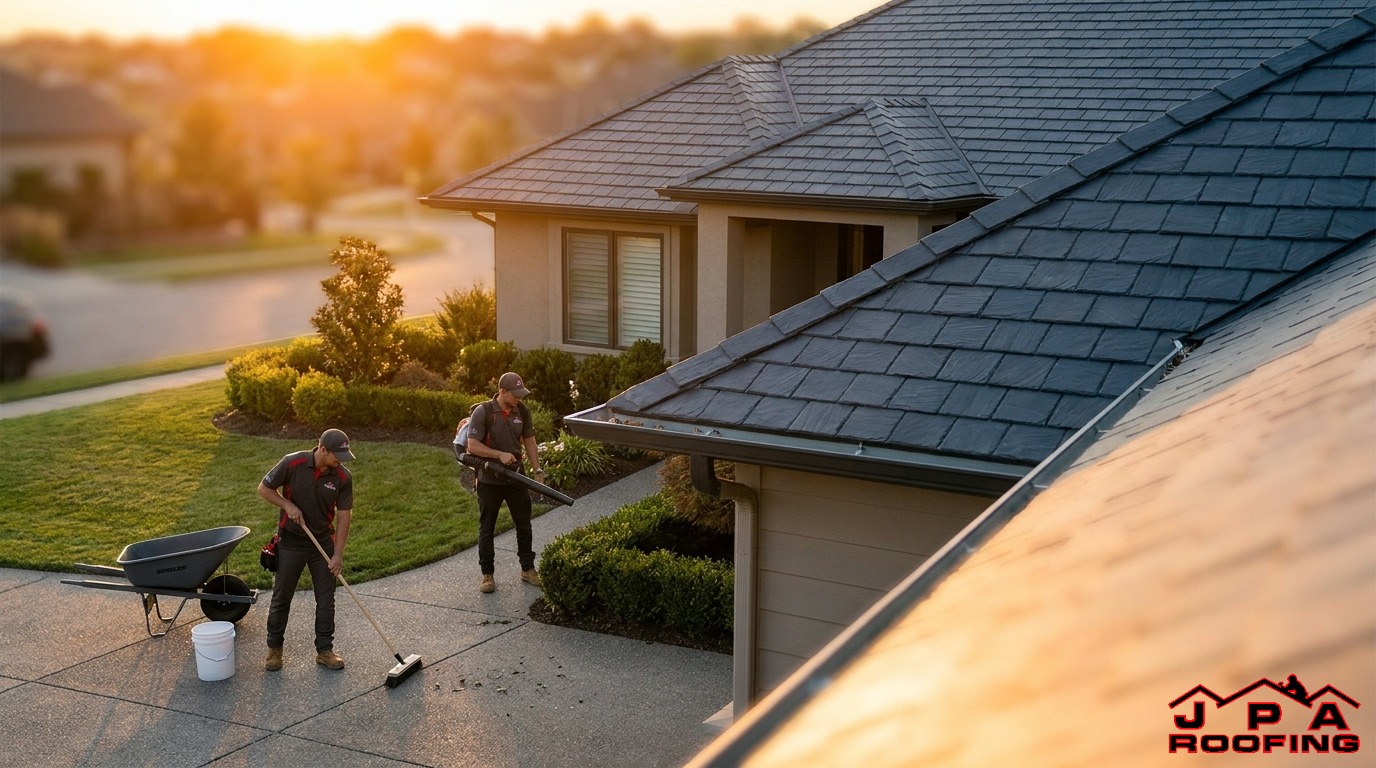
At JPA Roofing, founded by Jose Prieto, we believe that an exceptional roofing experience does not end when the last shingle is nailed down. That same standard carries through to how we leave your property: a documented, multi-step cleanup process, not an afterthought. In this guide, we will examine why proper post-roofing cleanup prevents property damage, what safety hazards to watch for, and how our solution-oriented crew protects your lawn, landscaping, and vehicles.
Proper post-roofing cleanup prevents property damage by systematically removing sharp nails, abrasive shingle granules, and heavy debris that can puncture vehicle tires, injure family pets, clog gutters, crush expensive landscaping, and damage outdoor HVAC condenser units during a roof replacement project.
Doing a physical walkthrough with a dedicated JPA Roofing project supervisor gives you complete peace of mind that your property is safe, clean, and beautiful. It is our goal to leave your property completely free of construction hazards.
Key Strategies for Post-Roofing Cleanup and Property Protection
Summary for Why Proper Post-Roofing Cleanup Prevents Property Damage
Key related topics covered here include Commercial Roofing, Roofing Inspections, Leak Repair, Metal Roof Repair with practical context for decision-makers.
Why is a thorough post-roofing cleanup critical for preventing property damage?
A thorough post-roofing cleanup is not merely an aesthetic finishing touch; it is a critical phase of risk mitigation. When a Residential Roofing crew tears away old shingles, they are essentially dismantling a multi-ton shield of asphalt, fiberglass, and metal. The sheer volume of waste generated during a standard roof replacement is immense, often exceeding 3 to 4 tons of waste material. If this debris is allowed to scatter freely across your property, it can inflict severe physical and financial damage. In prestigious neighborhoods across Fairway and Leawood, KS, homes feature meticulous landscaping, custom concrete driveways, and high-efficiency HVAC systems. Falling debris from a roof replacement can quickly shatter delicate elements, clog expensive drainage systems, and introduce sharp hazards to your yard. A premium roofing contractor understands that protecting your home means managing this risk from the moment the first shingle is lifted until the final magnetic sweep is completed.What types of dangerous construction debris are typically left behind after a roof replacement?
During a roof replacement, a wide variety of construction debris is loosened and discarded. Without a disciplined cleanup system, your property can quickly become littered with industrial hazards. Tearing off old materials releases more than just the visible shingles; it disturbs years of accumulated dirt and structural fragments. The most common types of leftover roofing debris include:- Rusted and Sharp Fasteners: Tens of thousands of old roofing nails are pulled out during the tear-off process.
- Asphalt Shingle Scraps: These are sharp, heavy, and often embedded with fiberglass fibers that can irritate skin and paws.
- Utility Knife Blades: Roofing specialists frequently change blades while cutting underlayment and shingles, leaving behind discarded metal hazards.
- Abrasive Shingle Granules: Millions of tiny mineral granules shed from old shingles, which can severely clog gutters and wash into your lawn.
- Underlayment and Plastic Wraps: Synthetic underlayment and plastic packaging from new shingles can blow away, suffocating grass and blocking drainage.
- Splintered Wood Debris: Rotten decking boards that require replacement are cut and removed, leaving sharp wood splinters.
How do leftover roofing nails damage vehicle tires and injure family pets?
One of the most immediate threats of a poorly executed cleanup is the danger of leftover roofing nails. These metal fasteners are designed with wide, flat heads and sharp shafts, making them highly prone to standing upright in lawns or wedging themselves into driveway crevices. If a vehicle drives over these nails, they can easily cause slow leaks or sudden tire blowouts, resulting in unexpected repair costs. The risk is even higher for family pets and children. Dogs and cats running through the yard can step on these sharp fasteners, leading to painful puncture wounds, infections, and expensive veterinary visits. Because roofing nails are small and dark, they are nearly impossible to spot in a standard lawn with the naked eye.What methods do professional roofers use to safeguard delicate lawns and landscaping during tear-off?
Safeguarding a manicured lawn in Leawood or Lenexa, KS, requires planning long before the physical work begins. GAF Master Elite contractors use specialized protective frameworks to ensure your landscaping remains pristine. For example, our crews utilize heavy-duty plywood shields to protect windows and delicate foundation plantings from falling shingles. Additionally, crews establish protective catchment systems using heavy-duty tarps draped from the roofline down to the ground. This creates a slide that directs falling shingles away from delicate ornamental bushes and flower beds directly into the disposal container. This containment method prevents heavy debris from snapping branches or flattening flower beds.Why is cleaning out gutters and downspouts crucial after installing a new asphalt roof?
A roof installation is not truly complete until the Gutters and downspouts have been completely cleared and flushed. During a roof replacement, massive quantities of loose shingle granules, underlayment scraps, and small metal shards slide down the roof valleys and settle in your gutter troughs. This debris can quickly accumulate and block the flow of rainwater. If this dense, heavy debris is left in the gutters, it can create several severe problems:- Water Backup and Fascia Rot: Clogged downspouts prevent water from draining during heavy rain, forcing water to back up under the new shingles, rotting the wooden fascia boards.
- Gutter Sagging and Collapse: The heavy weight of accumulated asphalt granules combined with standing water can pull gutter brackets away from your home, causing expensive structural damage.
- Foundation Damage: When gutters overflow, water pools directly at the foundation of your home, potentially causing basement leaks or soil erosion.
How can heavy trash dumpsters and falling debris damage your concrete driveway and HVAC system?
A roof replacement requires heavy machinery and large disposal containers. If a contractor is careless, these heavy elements can cause permanent, costly damage to your driveway and home systems. Proper site preparation is essential to prevent these issues.Preventing Concrete Cracks from Heavy Dumpsters
A full commercial or residential roofing dumpster can weigh upwards of 10,000 pounds. When placed directly on a concrete or asphalt driveway, the wheels can easily crack the surface, leave permanent indentations, or damage underground utility lines. Professional roofers prevent this by placing protective wooden planks under the dumpster wheels and trailer jacks to distribute the weight evenly.Protecting Your Exterior HVAC Condenser
Your outdoor air conditioning condenser unit is highly vulnerable during a roof replacement. Falling shingles, plywood scraps, and heavy underlayment can strike the unit, crushing its delicate aluminum fins and bending the fan blades.How does a magnetic sweep tool work to remove hidden nails and metal fasteners from your grass?
To achieve an uncompromising clean, professional roofing crews rely on specialized industrial magnetic sweepers. These tools are equipped with powerful permanent magnets (often utilizing high-strength neodymium blocks) mounted on a rolling wheeled chassis. As the sweeper rolls over the ground, the magnetic field attracts metal objects, pulling them out of the turf. When rolled across the grass, driveways, and sidewalks, the magnetic field easily lifts heavy steel and iron roofing nails out of the dirt, grass, and crevices, snapping them firmly against the sweeper's bottom plate. This is highly effective for gathering thousands of discarded fasteners that are invisible to the human eye. A premium cleaning protocol requires more than a single quick pass. To ensure that hidden fasteners are completely removed, specialists execute a systematic "cross-hatch" pattern. This involves rolling the sweepers vertically, then horizontally, across the entire perimeter of the home. This multi-directional approach ensures that nails lying at odd angles or wedged between blades of grass are successfully extracted.What steps should homeowners follow for a post-roofing cleanup final walkthrough?
Before you sign off on your roof installation, you should conduct a detailed visual and physical walkthrough with your contractor. This process ensures that every detail of the work agreement has been executed to the highest standard and that your property has been returned to its original condition.Post-Roofing Cleanup Walkthrough Checklist
- Examine the Lawns and Flower Beds: Check for any missed shingle scraps, plastic wrappers, or stray nails hiding under foliage.
- Inspect the Driveway and Walkways: Scan for metal fasteners, especially near the edges where the dumpster was positioned.
- Check the Gutters and Downspouts: Verify that the gutters have been cleared of shingle granules and flushed with water.
- Evaluate the HVAC Condenser: Inspect the outdoor AC unit's aluminum fins to ensure they are straight and free of debris.
- Look for Siding and Window Damage: Walk the perimeter to confirm no falling debris has scratched your siding or cracked your window screens.
- Review the Attic Space: Quickly check your attic to ensure no large pieces of debris or dust fell onto your stored belongings during the tear-off.
How can you resolve disputes if a roofing contractor fails to clean up or damages your property?
Even with careful planning, disputes over cleanup or property damage can occasionally happen. Here's how to protect yourself if that occur.- Document the Evidence Immediately: Take high-resolution, timestamped photos of the leftover debris or damaged property (such as cracked concrete, crushed gutters, or damaged HVAC units).
- Withhold the Final Payment Percentage: Never release the final payment (typically 10% to 15% of the total contract value) until the cleanup is completed to your satisfaction and any damage is addressed. This provides powerful leverage to ensure the contractor returns to resolve the issue.
- Review the Contract and Work Agreement: Check the terms of your contract. Reputable companies will have clear provisions regarding property protection and post-work cleanup.
- File a Claim with the Contractor's Insurance: If the contractor refuses to repair physical damage, request their general liability insurance and bond information to file a formal claim.
| Strategy | Why It Matters |
|---|---|
| Pre-Project Lawn Mowing | Keeps grass short so magnetic sweepers can easily attract and remove falling metal fasteners before they get lost in the turf. |
| HVAC & Condenser Shielding | Prevents falling shingles from crushing aluminum fins, maintaining efficient system cooling and preventing compressor failure. |
| Driveway Weight Distribution | Uses wooden planks under heavy dumpster wheels to prevent cracking or indenting concrete and asphalt driveways. |
| Multi-Pass Magnetic Sweeping | Ensures all hidden nails, staples, and sharp metal debris are pulled out of lawns, preventing tire punctures and pet injuries. |
| Complete Gutter Flushing | Removes dense shingle granules and debris to prevent water backup, fascia wood rot, and foundation pooling. |